 Snorkeling Zanzibar
Snorkeling in Zanzibar for Beginners
Snorkeling in Zanzibar for beginners does not require strong swimming or any prior experience: every compared boat trip supplies a mask, fins, snorkel and a life jacket, and the guides handle the rest. The main reef most first-timers reach, Mnemba Atoll, sits at a shallow two to five metres, close enough to the surface to see clearly without diving down. This guide covers which trip actually suits a nervous first-timer, what happens in the water in the first hour, the three things that usually go wrong with a mask, and the mistakes worth skipping on a first Zanzibar boat day.
Quick answer
Snorkeling in Zanzibar for beginners needs no prior experience and no strong swimming: every compared trip provides mask, fins, snorkel and a life jacket, and the main reef at Mnemba sits at a shallow two to five metres. The $42 half-day trip has reviewer-documented guides who teach first-timers in the water, and no shark attack has been reported in these waters.
Key takeaways
- Every trip on this site supplies mask, fins, snorkel and a life jacket, so nobody arrives needing their own gear to participate
- The Mnemba reef sits at roughly two to five metres, shallow enough that a nervous first-timer can see the bottom clearly from the surface
- The $42 half-day trip has reviewers describing guides teaching first-time snorkelers directly in the water
- There have been no reported shark attacks in Zanzibar's snorkeling waters
- Bring an own mask if possible: rental kit across the island ranges from mediocre to unusable, and a bad seal is the single most common first-timer complaint
- The 8-person Tumbatu trip is the smallest group on the catalog, which usually means more guide attention per person
Can You Snorkel if You Cannot Swim Well?
This is the question that stops most first-timers before they even look at a specific tour.
The life jacket does most of the work
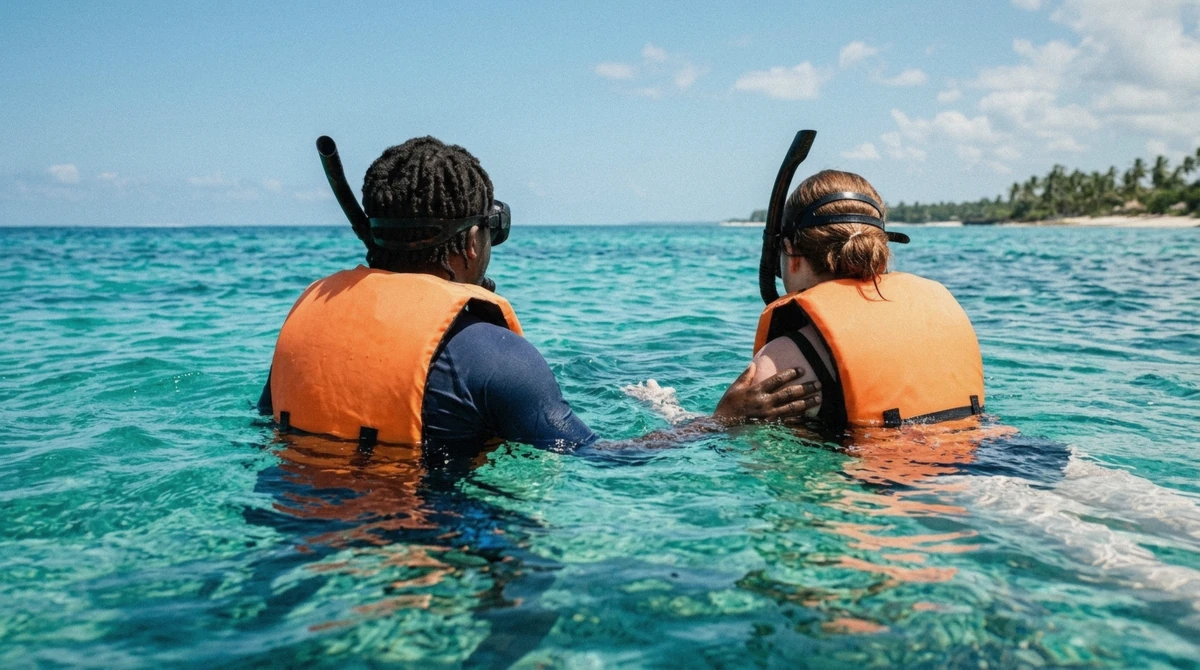
Every trip compared on this site includes a life jacket, and the standard beginner approach is to float face-down at the surface rather than swim actively. A weak swimmer can manage the whole activity this way: the fins provide the little forward movement needed, the life jacket keeps the body at the surface without effort, and the guide stays close to anyone visibly struggling. Strong swimming is genuinely not the requirement it sounds like from the outside.
Why the shallow reef helps
The Mnemba reef sits at roughly two to five metres, which matters more for confidence than for swimming ability. At that depth the bottom is clearly visible from the surface, so a first-timer floating at the surface with a life jacket on can see fish, coral and sand without ever needing to dive down or exert much effort. That visibility is part of why this particular reef works well for a first attempt, compared with a deeper site where the reward for effort is less immediate.
Your First Hour in the Water, Step by Step
The sequence is roughly the same across the compared trips, even though the exact minutes vary by operator.
Fitting and testing at the boat
Before anyone enters the water, the crew hands out mask, fins and a life jacket and checks that the mask seals against the face without leaking. This is the moment to speak up about a loose strap or an uncomfortable fit rather than waiting until the water. Guides on the shallower, calmer starts often let first-timers put their face in the water beside the boat first, breathing through the snorkel while still holding the ladder or gunwale, before anyone actually swims away from it.
The first few minutes in open water
The first stretch of actual swimming tends to be the part that feels strangest: breathing through a tube while the face is submerged runs against every instinct built up on land. Most of that unfamiliar feeling fades within a few minutes of steady breathing and a guide nearby to correct anything that feels wrong. On the $42 half-day trip, reviewers specifically describe guides teaching first-time snorkelers directly in the water rather than only briefing them on the boat beforehand, which is a meaningfully different level of support than a briefing-only trip provides.
Settling in
Once the breathing rhythm feels normal, most first-timers stop thinking about the mechanics entirely and start actually looking at what is under the boat. This is usually the point where the trip stops feeling like a task and starts feeling like the reason it was booked in the first place. A guide typically keeps the group within a tight radius during this stretch, both for safety and because the shallow reef does not require covering much distance to see plenty.
The return and the debrief
Toward the end of the water time, guides usually call the group back toward the boat gradually rather than all at once, which gives anyone still finding their rhythm a few extra unhurried minutes before climbing the ladder. Back on board, a short debrief covers what was seen and, on trips heading further out afterward, what to expect at the next stop. Anyone who struggled at any point is worth mentioning it to the crew here rather than staying quiet about it, since a second, shorter water session later in the day is often easy to arrange and turns a shaky first attempt into a better second one.
Which of These Trips Suits a First-Timer
Price and reef quality are not the only things that matter for a first attempt, and our Zanzibar snorkeling comparison ranks all six trips on more than price. Group size, briefing depth and how gently the trip eases someone into the water matter just as much for a nervous first-timer.
Trip by trip
The two consistent patterns: smaller groups get more individual attention, and any trip that combines a sandbank or shallow stop with the reef gives a nervous first-timer a gentler ramp-up than going straight to open water.
| Tour | First-timer fit | Why |
|---|---|---|
| Mnemba Dolphin Swim and Snorkel Half Day, $42 | Best documented fit | Reviewers describe guides teaching first-time snorkelers directly in the water; not suitable for children under 3 |
| Dolphin and Tumbatu Island Snorkeling, $71 | Best small-group fit | Capped at 8 participants, the smallest boat on the catalog, which usually means more guide attention per person |
| Prison Island and Nakupenda Sandbank Tour, $41 plus $22 cash | Gentlest ramp-up | Combines a sandbank swim with the reef, and children under 8 get 30 percent off, a sign the operator plans for less confident swimmers |
| Mnemba Boat Trip and Dolphin Snorkel from Kendwa, $55 | Solid, bigger boat | Fees included and well-reviewed, though not suitable for travellers over 80 or prone to motion sickness |
| Private Mnemba Dolphin Safari, $70 | Best if budget allows | A private boat sets its own pace, useful for an anxious first-timer who wants extra time without a group waiting |
| Safari Blue Lagoon Day Trip, $90 | Good, but a long day | Guided snorkeling with kit included across a 7-hour itinerary, more day than some first-timers want for a first attempt |
None of the six is a bad choice for a beginner. The differences are in how much individual attention a nervous first-timer gets and how gently the day eases into the water, not in whether the activity itself is appropriate for someone with zero experience.
What to Bring
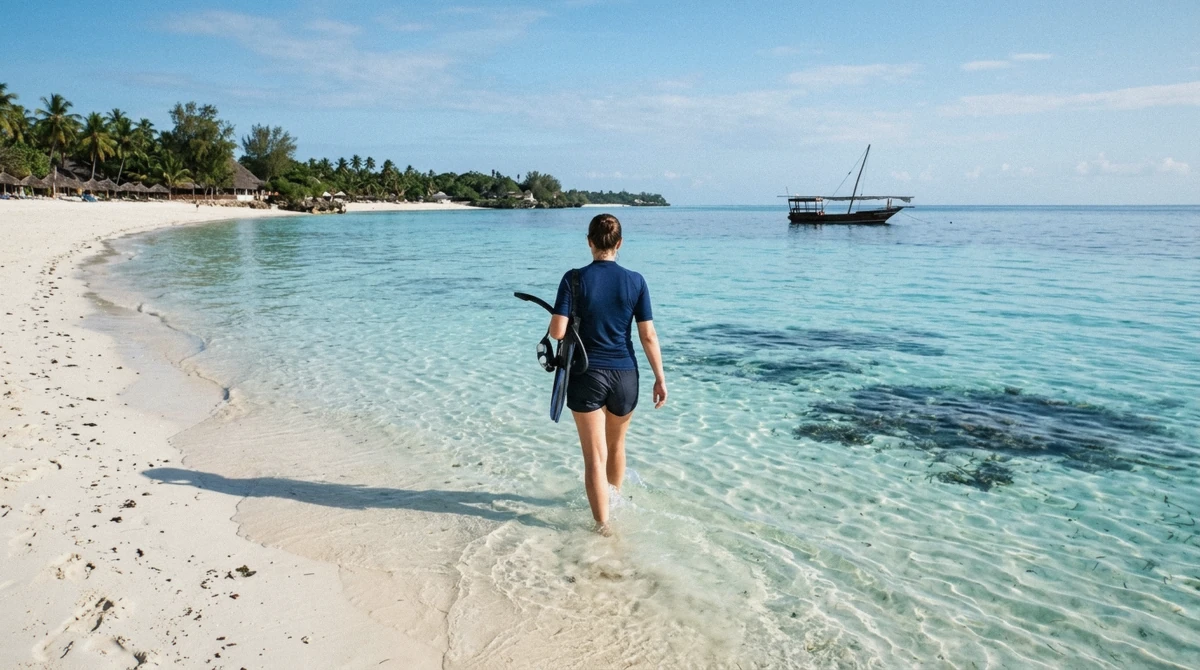
Every trip supplies the core gear. The list below covers what still helps to bring along.
The short packing list
Rental kit across the island ranges from mediocre to unusable, so bringing an own mask matters more here than the gear-included line on a listing might suggest.
- Own mask and snorkel if available, even a basic set: a properly fitted mask is the single biggest factor in a comfortable first snorkel
- Reef-safe sunscreen, applied before boarding: it is close to unbuyable in island supermarkets, so bring it from home
- A rash guard or light long-sleeve top, useful for sun and for the cooler water reported from July to September
- Small-denomination US dollars in cash: no card machines on a beach launch or a sandbank, and fees like the $22 on the Prison Island trip are collected on the day
- A spare pair of contact lenses or a strap for glasses, if either applies, since a lost lens or a pair of glasses left behind mid-swim is a common and avoidable annoyance
Mask Fit, Fogging and the Three Things That Go Wrong
Nearly every beginner complaint about a snorkeling day traces back to one of three fixable mask problems.
A seal that leaks
The most common issue is a mask that lets water in, usually because a strap of hair or facial hair crosses the seal, or because the strap sits too loose. Testing the seal at the boat before entering the water, by pressing the mask to the face and inhaling gently through the nose, catches this before it becomes a problem in open water. A mask that keeps leaking after re-seating it is worth swapping for a spare rather than tolerating it for the rest of the trip; most boats carry a backup or two for exactly this reason.
Fogging on the inside of the lens
A brand-new or rental mask fogs easily because the factory coating on the lens attracts condensation from breath and body heat. A light rub of the inside of the lens with saliva or a dab of baby shampoo before entering the water, then a quick rinse, cuts fogging noticeably for most masks.
Water in the snorkel from waves or a submerged tip
The third common issue is water entering the top of the snorkel tube, either from chop at the surface or from ducking the head slightly too low. Most modern snorkels used on these trips include a splash guard or purge valve that clears water with a firm exhale, and guides typically demonstrate this clearing technique during the boat briefing before anyone enters the water. Panicking and lifting the head fully out of the water works too, but it is the slower, more tiring fix; a firm exhale through the tube clears it in place without breaking the floating position.
The three failures, and the fix for each
Every first-timer problem in the water is one of these three, and each has a fix you can do before the boat leaves.
| What goes wrong | How you notice | The fix, before you get in |
|---|---|---|
| A leaking seal | Water pools under your nose within a minute | Press the mask on dry, breathe in through the nose, let go: it should hold on its own |
| Fogging | The lens greys over after a few breaths | Rub a little saliva or defog on the dry inside, rinse once, do not wipe it dry again |
| Water down the snorkel | A mouthful on the first swell | Keep the tip clear of the surface, blow out sharply through the tube twice |
| Hair in the seal | A slow steady drip along the top edge | Pull the strap over the hairline, tuck stray hair out from under the skirt |
| A strap too tight | Pressure headache and a red ring | The strap holds the mask in place, the seal does the work: loosen until it is barely snug |
Reef Safety, Currents and What Not to Touch
The core rules are the same across every reef this catalog visits.
The rules that matter most
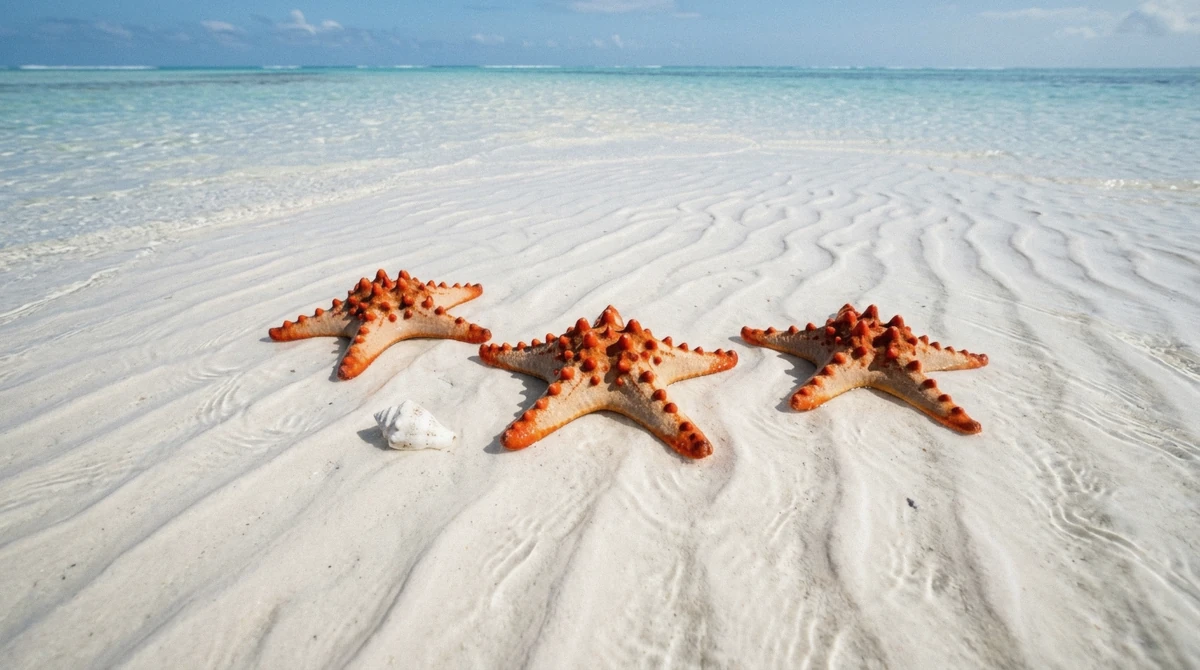
Reef etiquette across Zanzibar's snorkeling sites comes down to a short list: do not stand on coral, do not touch marine life, and do not chase turtles or dolphins if the trip encounters them. Coral is a living animal and standing fins or hands on it can kill the colony touched, while touching fish or other creatures risks both the animal and, occasionally, a sting. There have been no reported shark attacks in these waters, which is worth knowing plainly rather than leaving as an unspoken worry.
Currents and staying with the group
The reefs compared here are not known for strong currents at the depths a beginner swims, but guides still keep groups within a defined area and expect swimmers to stay in sight rather than range off independently. Following that instruction, rather than treating it as an overcaution, is the simplest way to avoid the one genuine risk on a calm day, which is drifting further from the boat than intended without noticing.
Sun and heat, an underrated first-timer risk
The more common problem on a first Zanzibar snorkel is not the reef itself but sunburn on the back of the legs and neck, the parts of the body facing the sun for an hour or more while floating face-down. A rash guard covers most of this risk on its own, and reapplying reef-safe sunscreen before boarding, not just once at the hotel that morning, closes the rest of the gap.
Beginner Mistakes on a Zanzibar Boat
A handful of avoidable mistakes account for most of the disappointing first snorkels.
Trusting rental gear without testing it
Using unfamiliar rental gear without testing the seal at the boat, rather than discovering a leak at the last minute in the water, is the single most common mistake. A thirty-second check on deck, mask pressed to the face and a gentle inhale through the nose, catches most problems before they become a mid-swim distraction.
Skipping reef-safe sunscreen and reaching for whatever the hotel gift shop stocks is the second common mistake, since much of what is locally available is not reef-safe and is genuinely hard to find otherwise. Wading in without asking the guide to demonstrate the snorkel-clearing technique first, rather than figuring it out mid-swim, causes needless panic over something that takes seconds to fix once shown.
Booking a trip during April, May or November without checking the season is another avoidable mistake: a first snorkel in rough, murky water is a worse first impression than the activity deserves, and it has nothing to do with how well the trip itself is run. Treating a turtle or dolphin sighting as guaranteed, rather than the lucky-day event it actually is, sets up a disappointment that also has nothing to do with the operator. And arriving without small-denomination cash for a trip like Prison Island, where part of the cost is collected on the day, turns an easy transaction into an unnecessary scramble at the dock.
Snorkeling in Zanzibar for Beginners: Questions Travellers Ask
Is snorkeling in Zanzibar good for beginners?
Yes. Every compared trip provides mask, fins, snorkel and a life jacket, the main Mnemba reef sits at a shallow two to five metres, and at least one operator's guides are reviewer-documented teaching first-timers directly in the water.
Can you snorkel in Zanzibar if you cannot swim?
A weak swimmer can still take part: the included life jacket keeps a person at the surface with little effort, and the standard technique is floating face-down rather than swimming actively. A non-swimmer with real anxiety about open water should still mention it to the operator before booking.
Do the boats provide life jackets?
Yes, every trip compared on this site includes a life jacket along with mask, fins and snorkel, so no traveller needs to arrive with their own flotation gear.
How deep is the reef at Mnemba?
Roughly two to five metres, shallow enough that the bottom is clearly visible from the surface without diving down, which is one reason it works well for a first snorkel.
What should I be careful of in Zanzibar snorkeling trips?
A poorly sealed mask is the most common source of a bad first experience, followed by skipping reef-safe sunscreen and treating a turtle or dolphin sighting as guaranteed rather than a lucky-day event. There have been no reported shark attacks in these waters.
Is there an age limit for first-time snorkelers in Zanzibar?
It depends on the operator. Some listings exclude travellers over 70 or 80, and one excludes children under 3; check the specific tour's restrictions before booking rather than assuming they are all the same. Travelling with young children specifically is covered on snorkeling in Zanzibar with kids.
Is snorkeling in Zanzibar worth it for a total beginner?
The reef access, included gear and shallow Mnemba depth make it a reasonable first snorkel for most people. The full honest breakdown of costs, crowds and reef condition against the price is on is snorkeling in Zanzibar worth it.
See how all six trips stack up on price, group size and reef before booking a first snorkel.